How Age Affects IVF Success and Fertility Outcomes

What Is IVF Treatment? A Complete Guide for Couples
March 5, 2026
Understanding the IVF Cycle: Step-by-Step Guide for Couples
April 3, 2026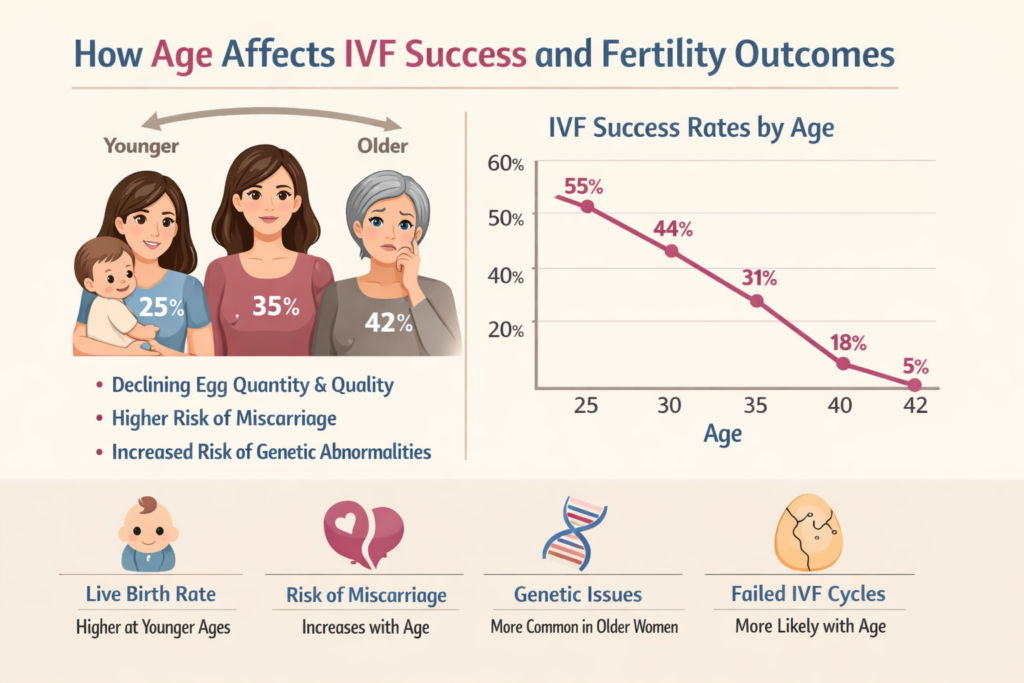
For many couples planning a family, age becomes one of the most important factors influencing fertility. While modern medical science has made remarkable progress with assisted reproductive technologies like IVF, the biological impact of age on reproductive health cannot be ignored. Understanding how age affects fertility and IVF outcomes can help individuals make informed decisions about their reproductive journey.
If you are considering fertility treatment, knowing the role age plays in conception can prepare you emotionally, medically, and financially for the process.
Why Age Plays a Crucial Role in Fertility
Human fertility naturally declines with age, particularly in women. A woman is born with all the eggs she will ever have, and both the quantity and quality of these eggs decrease over time. This biological process significantly affects the chances of natural conception as well as the success rate of assisted reproductive treatments.
In the early 20s, fertility levels are typically at their peak. During this period, ovulation is more regular, egg quality is higher, and the chances of successful pregnancy are greater. As women move into their 30s and beyond, fertility gradually begins to decline.
By the mid-to-late 30s, the drop becomes more noticeable, and after 40, the chances of conception reduce considerably due to declining ovarian reserve and increased chromosomal abnormalities in eggs.
IVF and Age: Understanding the Connection
In Vitro Fertilization (IVF) is one of the most widely used fertility treatments that helps couples conceive when natural methods become difficult. While IVF can significantly improve the chances of pregnancy, age still remains a key factor in determining its success.
IVF works by retrieving eggs from the ovaries, fertilizing them with sperm in a laboratory, and transferring the resulting embryo into the uterus. The quality of eggs plays a central role in whether the embryo develops properly and implants successfully.
Younger women generally produce healthier eggs, which increases the likelihood of fertilization, embryo development, and successful implantation. As age increases, egg quality declines, which may lead to lower IVF success rates.
However, it is important to remember that every individual is different. Many women in their late 30s and even early 40s achieve successful pregnancies with the help of advanced reproductive technologies.
Fertility in the 20s: The Most Favorable Stage
The 20s are considered the most fertile years for women. During this stage, ovarian reserve is strong, egg quality is optimal, and hormonal balance supports regular ovulation.
Couples attempting IVF during this age group generally experience higher success rates. The embryos created from younger eggs tend to have fewer genetic abnormalities, which improves implantation chances and reduces the risk of miscarriage.
Although fertility treatments are less commonly needed at this age, IVF may still be recommended in cases involving conditions such as blocked fallopian tubes, severe male infertility, or genetic disorders.
Fertility in the Early 30s: Gradual Changes Begin
In the early 30s, fertility remains relatively strong, but subtle biological changes begin to occur. Egg quantity slowly declines, and egg quality starts to decrease slightly.
For most women, the chances of natural conception are still good, and IVF success rates remain high. However, doctors may begin to recommend earlier fertility evaluations if couples experience difficulty conceiving after a year of trying.
Seeking consultation from the Best Gynecologist Obstetricians in Aligarh can help identify potential fertility concerns early and guide couples toward appropriate treatment options before age-related decline becomes more significant.
Fertility in the Late 30s: Noticeable Decline
By the late 30s, fertility decline becomes more noticeable. Ovarian reserve reduces significantly, and egg quality decreases at a faster rate.
This stage is often associated with:
- Lower egg production during IVF cycles
- Higher chances of chromosomal abnormalities in embryos
- Increased risk of miscarriage
- Longer time required to achieve pregnancy
Despite these challenges, IVF continues to provide hope for many couples. Fertility specialists often recommend tailored treatment plans that may include advanced techniques such as embryo freezing, genetic screening, or hormone stimulation protocols.
Couples considering Fertility Treatments in Aligarh during this age group can benefit from early medical intervention and personalized care plans that improve the chances of successful conception.
Fertility After 40: Challenges and Possibilities
After the age of 40, fertility declines more rapidly due to a significant drop in both egg quantity and quality. Natural conception becomes more difficult, and the success rates of IVF cycles may also decrease.
Several factors contribute to these challenges:
- Reduced ovarian reserve
- Poor egg quality
- Higher risk of genetic abnormalities
- Increased miscarriage rates
However, this does not mean pregnancy is impossible. Many women successfully conceive through IVF even in their early 40s. Fertility specialists may recommend additional strategies such as donor eggs, embryo screening, or specialized stimulation protocols to improve success rates.
Modern reproductive medicine continues to evolve, offering new hope for couples who wish to conceive later in life.
Male Age and Fertility
While female fertility often receives more attention, male age also plays an important role in reproductive success.
As men age, sperm quality may decline, leading to:
- Reduced sperm motility
- Increased DNA fragmentation
- Lower fertilization rates
These changes can impact both natural conception and IVF outcomes. Therefore, fertility evaluation usually includes both partners to ensure a comprehensive understanding of reproductive health.
Advanced diagnostic techniques help fertility specialists identify male factor infertility and recommend suitable treatments.
How IVF Technology Improves Success Rates
Advancements in reproductive medicine have significantly improved IVF success rates over the past two decades. Techniques such as embryo freezing, genetic screening, and improved laboratory conditions have enhanced embryo development and implantation outcomes.
Some of the modern advancements include:
Preimplantation Genetic Testing (PGT)
This technique helps identify genetically healthy embryos before transfer, increasing the chances of successful pregnancy.
Blastocyst Culture
Allowing embryos to develop for five days before transfer improves embryo selection and implantation success.
Cryopreservation
Egg and embryo freezing allow individuals to preserve fertility for future family planning.
These innovations have made IVF more effective for patients across different age groups.
Emotional and Psychological Considerations
Fertility treatments can be emotionally challenging for couples, particularly when age-related concerns are involved. The journey often includes multiple medical appointments, treatment cycles, and periods of uncertainty.
It is important for couples to prioritize emotional well-being during this process. Support from family members, counseling services, and fertility support groups can help manage stress and maintain a positive outlook.
Open communication between partners also plays a vital role in navigating the emotional aspects of fertility treatment.
When Should You Consider Fertility Evaluation?
Many couples delay fertility consultations, assuming conception will happen naturally with time. However, early evaluation can significantly improve treatment outcomes.
Doctors generally recommend fertility assessment if:
- A couple has been trying to conceive for one year without success
- The woman is over 35 and unable to conceive after six months
- There is a history of irregular periods or reproductive disorders
- There are known male fertility issues
Consulting specialists at a reliable Test Tube Baby Center in Aligarh can help diagnose fertility issues early and guide couples toward effective treatment solutions.
Making Informed Decisions About Fertility
Age is an unavoidable factor in reproductive health, but understanding its effects allows couples to make better decisions regarding family planning. While fertility declines over time, modern reproductive technologies have opened new possibilities for those facing conception challenges.
Seeking timely medical advice, maintaining a healthy lifestyle, and exploring available treatment options can significantly improve the chances of achieving a successful pregnancy.