Understanding the IVF Cycle: Step-by-Step Guide for Couples

How Age Affects IVF Success and Fertility Outcomes
March 11, 2026
Tips for Summer Pregnancy: Stay Cool, Comfortable & Healthy
April 7, 2026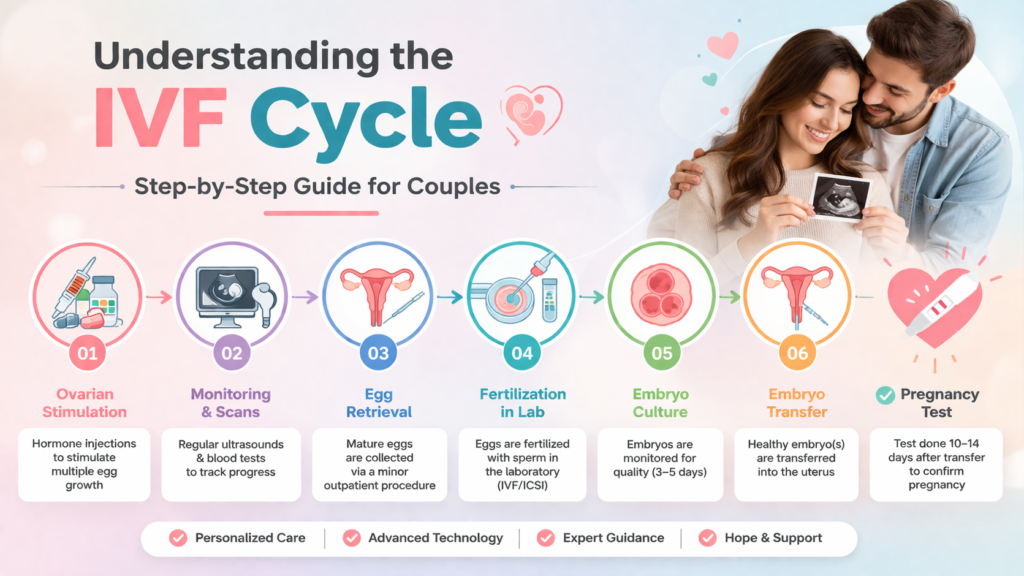
Starting an IVF journey is not just a medical decision. It is emotional, financial, and deeply personal. If you are considering IVF, you need clarity, not confusion. Let’s break it down in a way that actually makes sense, so you know exactly what to expect at every stage.
What is an IVF Cycle?
IVF (In Vitro Fertilization) is a process where eggs and sperm are combined outside the body in a lab to create an embryo. That embryo is then transferred into the uterus to achieve pregnancy.
A single IVF cycle includes everything from preparing the body for treatment to embryo transfer and pregnancy testing. It usually takes around 4 to 6 weeks, but the timeline can vary depending on individual health conditions.
Who Needs IVF?
Let’s be honest. IVF is not the first step for everyone. It’s usually recommended when simpler treatments fail or when there are specific medical conditions.
You may need IVF if:
- You have blocked or damaged fallopian tubes
- There is severe male infertility
- You have ovulation disorders
- You are dealing with endometriosis
- You have unexplained infertility
- You are trying to conceive at an advanced maternal age
Some couples also choose IVF for genetic screening or fertility preservation.
Step 1: Initial Consultation and Testing
Before jumping into treatment, doctors run a series of tests. This is where reality kicks in.
For women:
- Hormone testing
- Ultrasound to check ovarian reserve
- Uterus evaluation
For men:
- Semen analysis
This step is not just formal. It determines your chances of success and helps doctors design a personalized treatment plan. If someone promises “one-size-fits-all IVF,” that’s a red flag.
Step 2: Ovarian Stimulation
In a natural cycle, a woman produces one egg per month. IVF aims to increase that number.
You will be given hormone injections for about 8–14 days. These injections stimulate the ovaries to produce multiple eggs.
Here’s the reality:
- It can feel uncomfortable
- Mood swings are common
- Frequent monitoring is required
Doctors will track your progress through ultrasounds and blood tests. Timing matters a lot here. Too early or too late can affect the entire cycle.
Step 3: Egg Retrieval
Once the eggs are mature, a minor surgical procedure is done to retrieve them.
- It is done under mild anesthesia
- Takes around 20–30 minutes
- No major pain, but mild discomfort afterward
A needle is used to collect eggs from the ovaries through the vaginal wall.
On the same day, the male partner provides a sperm sample.
Step 4: Fertilization
This is where science takes over.
The eggs and sperm are combined in a lab. There are two main methods:
- Conventional IVF (mixing eggs and sperm)
- ICSI (injecting sperm directly into the egg)
Not every egg gets fertilized. And not every fertilized egg becomes a healthy embryo. This is where expectations need to stay realistic.
Step 5: Embryo Development
Fertilized eggs are monitored for 3 to 5 days.
Embryologists check:
- Cell division
- Quality of embryos
- Growth patterns
Only the healthiest embryos are selected for transfer.
Some couples also opt for genetic testing at this stage to reduce the risk of abnormalities.
Step 6: Embryo Transfer
This is a simple and painless procedure.
- No anesthesia required
- A thin catheter is used
- Takes about 10 minutes
One or more embryos are placed into the uterus. The number depends on age, embryo quality, and medical advice.
After this step, everything depends on implantation. And here’s the truth: no doctor can guarantee success.
Step 7: The Two-Week Wait
This is the hardest part mentally.
After embryo transfer, you wait for around 10–14 days before taking a pregnancy test.
Symptoms can be confusing:
- Mild cramps
- Spotting
- Breast tenderness
These don’t confirm anything. The only reliable answer comes from a blood test.
Success Rates: What You Need to Know
Let’s not sugarcoat this.
IVF success is not 100%. It depends on:
- Age
- Egg quality
- Sperm quality
- Uterine health
- Lifestyle factors
On average:
- Women under 35 have higher success rates
- Success declines with age
If someone is promising guaranteed results, walk away. IVF is science, not magic.
Risks and Side Effects
IVF is generally safe, but it’s not risk-free.
Possible risks include:
- Ovarian Hyperstimulation Syndrome (OHSS)
- Multiple pregnancies
- Emotional stress
- Financial pressure
Most side effects are manageable, but you should go in fully informed.
Emotional Reality of IVF
This part is often ignored, but it matters the most.
IVF can:
- Test your patience
- Affect your mental health
- Put pressure on relationships
You need emotional support. Whether it’s your partner, family, or a counselor, don’t try to handle everything alone.
Cost of an IVF Cycle
IVF is expensive. There’s no way around it.
Costs can include:
- Medications
- Procedures
- Lab charges
- Additional techniques like ICSI or genetic testing
And here’s the harsh truth: you might need more than one cycle.
Choosing the right clinic matters. Not the cheapest, not the flashiest. The one with transparency and ethical practices. If you are exploring options, consulting the Best Gynecologist Obstetricians in Aligarh , Best IVF Center in Aligarh can help you understand realistic outcomes and treatment plans tailored to your situation.
Tips to Improve IVF Success
You can’t control everything, but you can improve your chances.
- Maintain a healthy weight
- Avoid smoking and alcohol
- Manage stress levels
- Follow medication schedules strictly
- Choose an experienced fertility specialist
Don’t fall for gimmicks or “quick fixes.” IVF success is built on consistency and proper medical care.
Common Myths About IVF
Let’s clear some nonsense you might have heard.
Myth 1: IVF always works in one cycle
No. Many couples need multiple cycles.
Myth 2: Bed rest after transfer improves success
Not really. Normal activity is usually fine.
Myth 3: IVF babies are different
No. IVF babies are just as healthy as naturally conceived babies.
Final Thoughts
IVF is not an easy journey, but it is a powerful option for couples struggling with infertility. The key is going in with clear expectations, the right information, and a strong support system.
Don’t rush into it blindly. Ask questions. Understand every step. Challenge your doctor if something feels unclear.