What Is IVF Treatment? A Complete Guide for Couples

IVF After 35: Risks, Reality, and Success Tips
February 24, 2026
How Age Affects IVF Success and Fertility Outcomes
March 11, 2026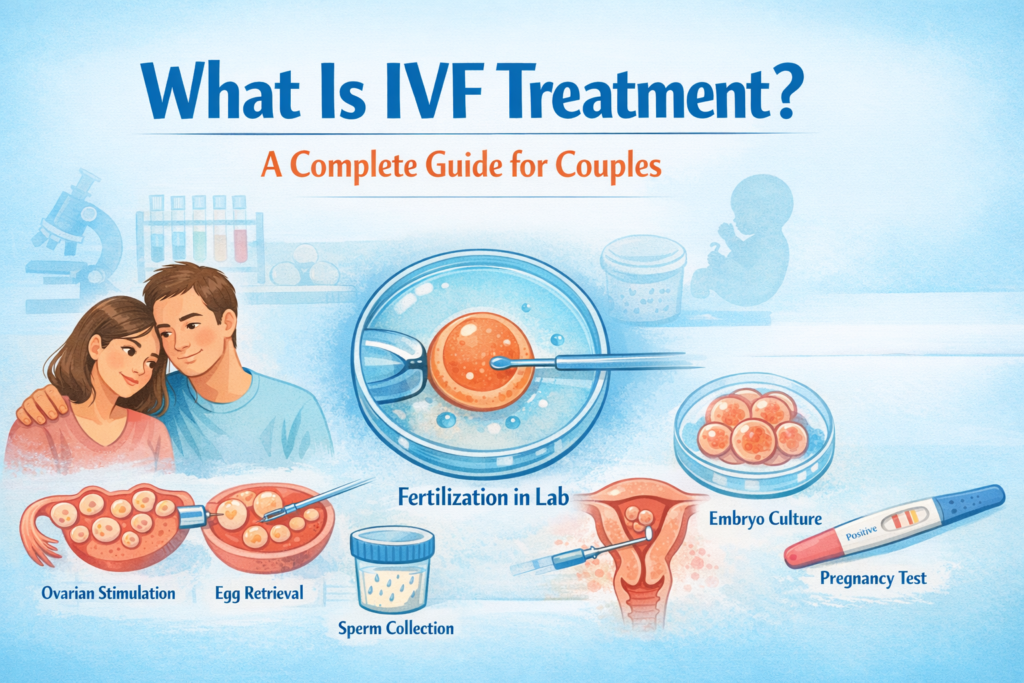
For many couples, the dream of having a baby is one of the most meaningful goals in life. But sometimes, getting pregnant naturally becomes difficult despite months or even years of trying. This can be emotionally draining and confusing, especially when you don’t understand what might be causing the problem. The good news is that modern fertility treatments have made parenthood possible for many couples who once believed it was out of reach.
One of the most advanced and widely used fertility treatments today is IVF. If you have heard the term before but are unsure about what it actually involves, this guide will help you understand the process, benefits, and expectations associated with IVF treatment.
What Is IVF Treatment?
IVF stands for In Vitro Fertilization, a medical procedure where fertilization occurs outside the human body in a laboratory. In a natural pregnancy, fertilization happens inside the fallopian tube when a sperm meets an egg. In IVF, doctors collect eggs from the woman’s ovaries and combine them with sperm in a controlled lab environment to create embryos.
Once healthy embryos are formed, one or more of them are transferred into the woman’s uterus, where they may implant and develop into a pregnancy.
This technique has helped millions of couples around the world overcome infertility and build families.
Who Can Benefit from IVF?
IVF is often recommended when other fertility treatments have not been successful or when certain medical conditions make natural conception difficult. Couples struggling with infertility for more than a year are often advised to consult fertility specialists to evaluate whether IVF could be a suitable option.
Some common situations where IVF may be recommended include:
Blocked or damaged fallopian tubes
Low sperm count or poor sperm quality
Ovulation disorders
Endometriosis
Unexplained infertility
Genetic disorders that require embryo screening
Age-related fertility decline
IVF can also help couples who wish to preserve fertility for the future or individuals using donor eggs, donor sperm, or surrogacy.
Understanding the IVF Process Step by Step
The IVF process involves several carefully planned stages. Each step is monitored by fertility specialists to increase the chances of success.
1. Ovarian Stimulation
The first step involves stimulating the ovaries using fertility medications. Normally, a woman releases one egg per month, but IVF requires multiple eggs to improve the chances of successful fertilization.
Hormone injections are given for around 8–12 days to help the ovaries produce multiple mature eggs. During this time, doctors monitor the development of follicles through ultrasound scans and blood tests.
2. Egg Retrieval
Once the eggs are mature, a minor procedure called egg retrieval is performed. This procedure is usually done under mild sedation and takes about 20–30 minutes.
Using ultrasound guidance, a thin needle is inserted through the vaginal wall to collect eggs from the ovaries. The eggs are then immediately transferred to the laboratory for fertilization.
3. Fertilization in the Laboratory
In the lab, the collected eggs are combined with sperm. Fertilization can occur in two ways:
Traditional IVF – sperm and egg are placed together in a culture dish.
ICSI (Intracytoplasmic Sperm Injection) – a single sperm is injected directly into the egg.
Within a few days, fertilized eggs begin developing into embryos.
4. Embryo Development
The embryos are closely monitored in the laboratory for about 3–5 days. During this period, specialists assess their growth and quality.
Healthy embryos have a better chance of implantation and pregnancy. Sometimes genetic testing is also performed to ensure embryos are free from certain genetic disorders.
5. Embryo Transfer
One or more healthy embryos are carefully transferred into the uterus using a thin catheter. This is a simple procedure that usually does not require anesthesia.
After the embryo transfer, the most important step begins — waiting to see if implantation occurs.
6. Pregnancy Test
About 10–14 days after embryo transfer, a blood test is performed to confirm pregnancy. If successful, the embryo continues developing just like a natural pregnancy.
Success Rates of IVF
The success of IVF depends on several factors including the woman’s age, underlying fertility conditions, embryo quality, and overall health.
Younger women generally have higher success rates because egg quality tends to decline with age. However, with advances in reproductive medicine, IVF success rates continue to improve each year.
Lifestyle habits such as maintaining a healthy weight, avoiding smoking, managing stress, and following medical advice can also improve the chances of a successful outcome.
Emotional and Physical Considerations
IVF is not only a medical process but also an emotional journey. Couples often experience a mix of hope, anxiety, excitement, and stress throughout the treatment.
It is important to have realistic expectations and emotional support during this time. Many fertility clinics provide counseling services to help couples manage the psychological aspects of treatment.
Partners should communicate openly, support each other, and remember that fertility treatment sometimes requires patience and multiple attempts.
Is IVF Safe?
IVF has been practiced for decades and is considered a safe and well-established fertility treatment. However, like any medical procedure, there can be some risks, including:
Mild side effects from fertility medications
Multiple pregnancies if more than one embryo is transferred
Ovarian Hyperstimulation Syndrome (OHSS) in rare cases
Experienced fertility specialists carefully monitor the treatment process to minimize these risks and ensure patient safety.
Preparing for IVF Treatment
If you are considering IVF, there are several steps you can take to prepare your body and mind for the treatment.
Schedule a complete fertility evaluation with a specialist.
Maintain a balanced diet and regular exercise routine.
Avoid smoking, alcohol, and excessive caffeine.
Manage stress through relaxation techniques or counseling.
Follow all medical advice provided by your fertility doctor.
Preparation plays an important role in improving treatment outcomes and ensuring a smoother IVF journey.
When Should You See a Fertility Specialist?
Many couples wait too long before seeking medical help. In general, you should consider consulting a fertility expert if:
You have been trying to conceive for more than 12 months without success.
The woman is over the age of 35 and has been trying for six months without pregnancy.
There is a history of miscarriage or reproductive health issues.
You have been diagnosed with conditions that affect fertility.
Early consultation allows doctors to identify problems quickly and recommend the most effective treatment plan.
Choosing the Right Fertility Center
Selecting the right fertility clinic is one of the most important decisions during your fertility journey. Couples should look for experienced specialists, advanced technology, transparent treatment plans, and supportive care.
If you are searching for the Best Gynecologist Obstetricians in Aligarh, choosing a trusted fertility expert can make a significant difference in your treatment experience and success.
A well-equipped Best Fertility Clinic in Aligarh can provide comprehensive fertility evaluations, personalized treatment plans, and modern reproductive technologies designed to help couples achieve their dream of parenthood.
Many couples also prefer a specialized Test Tube Baby Center in Aligarh where IVF procedures are performed with advanced laboratory support and experienced embryologists.
Final Thoughts
Infertility can be a challenging journey, but advancements in medical science have made parenthood possible for millions of couples through IVF treatment. Understanding the process, preparing for the treatment, and choosing the right medical support can make a huge difference in your experience.
IVF is not just a medical procedure; it is a pathway that brings hope to couples who wish to start or expand their families. With the guidance of skilled fertility specialists and the support of loved ones, many couples successfully overcome infertility and welcome healthy babies into their lives.