Fertility and Thyroid: Understanding the Important Connection

Importance of Breast Feeding: A Complete Guide for New Mothers
June 1, 2026
Fertility and Sugar: Understanding the Connection for Better Reproductive Health
June 16, 2026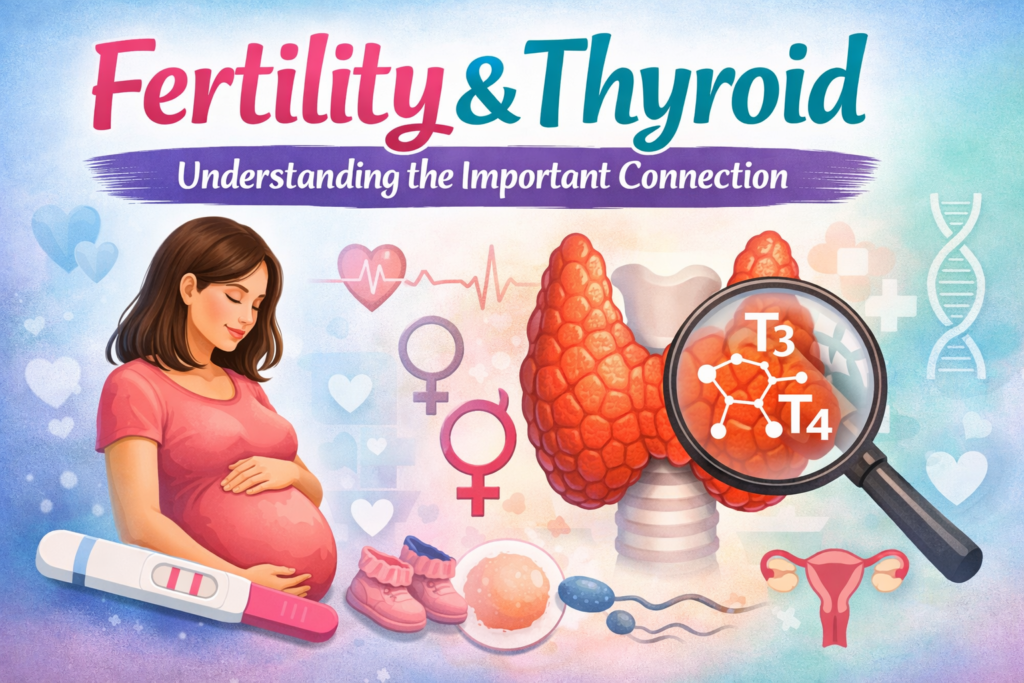
When planning a family, many couples focus on lifestyle, nutrition, and reproductive health. However, one factor that is often overlooked is thyroid health. The thyroid gland plays a vital role in regulating hormones that affect metabolism, energy levels, menstrual cycles, ovulation, and pregnancy. Any imbalance in thyroid function can directly impact fertility in both women and men.
Understanding the connection between fertility and thyroid disorders can help individuals seek timely treatment and improve their chances of conceiving naturally or through fertility treatments.
What Is the Thyroid Gland?
The thyroid is a small butterfly-shaped gland located at the front of the neck. It produces hormones called thyroxine (T4) and triiodothyronine (T3), which regulate various bodily functions. These hormones influence metabolism, body temperature, heart rate, and reproductive health.
When the thyroid gland does not produce the right amount of hormones, it can lead to:
- Hypothyroidism (underactive thyroid)
- Hyperthyroidism (overactive thyroid)
Both conditions can interfere with fertility and pregnancy outcomes.
How Thyroid Health Affects Fertility
The thyroid gland works closely with the reproductive system. Thyroid hormones interact with estrogen, progesterone, and other reproductive hormones that regulate ovulation and menstrual cycles.
An imbalance in thyroid hormones may lead to:
- Irregular menstrual cycles
- Ovulation problems
- Difficulty conceiving
- Increased risk of miscarriage
- Pregnancy complications
Maintaining optimal thyroid function is essential for reproductive health and successful conception.
Hypothyroidism and Fertility
Hypothyroidism occurs when the thyroid gland does not produce enough hormones. This condition is more common among women of reproductive age.
Symptoms of Hypothyroidism
Common symptoms include:
- Fatigue
- Weight gain
- Depression
- Dry skin
- Hair loss
- Constipation
- Sensitivity to cold
- Irregular periods
Impact on Fertility
Hypothyroidism can disrupt ovulation, making it difficult for an egg to be released regularly. Without proper ovulation, conception becomes challenging.
Some fertility-related effects of hypothyroidism include:
- Anovulation (absence of ovulation)
- Irregular menstrual cycles
- Luteal phase defects
- Reduced egg quality
- Increased risk of miscarriage
Even mild thyroid dysfunction can affect fertility and should not be ignored when trying to conceive.
Hyperthyroidism and Fertility
Hyperthyroidism occurs when the thyroid gland produces excessive hormones.
Symptoms of Hyperthyroidism
Common symptoms include:
- Rapid heartbeat
- Weight loss
- Anxiety
- Excessive sweating
- Tremors
- Sleep disturbances
- Irregular periods
Impact on Fertility
Excess thyroid hormones can interfere with reproductive hormone balance and affect ovulation.
Women with untreated hyperthyroidism may experience:
- Irregular menstrual cycles
- Reduced fertility
- Difficulty maintaining pregnancy
- Increased risk of miscarriage
- Premature birth
Proper diagnosis and treatment can significantly improve reproductive outcomes.
Thyroid Disorders and Female Fertility
Women are more likely than men to develop thyroid disorders. Since thyroid hormones influence the menstrual cycle and ovulation, thyroid dysfunction can directly affect a woman’s ability to conceive.
Menstrual Irregularities
Women with thyroid disorders may experience:
- Heavy periods
- Light periods
- Missed periods
- Frequent cycles
- Long cycles
Irregular menstrual cycles often indicate ovulation problems, reducing the chances of pregnancy.
Ovulation Problems
The thyroid gland helps regulate the hormones responsible for egg development and release. When thyroid hormone levels are abnormal, ovulation may become irregular or stop completely.
Increased Risk of Miscarriage
Studies have shown that untreated thyroid disorders can increase the risk of early pregnancy loss. Proper thyroid management before conception can help reduce this risk.
Thyroid Disorders and Male Fertility
Although fertility discussions often focus on women, thyroid health also affects male reproductive function.
Thyroid disorders in men can lead to:
- Reduced sperm count
- Poor sperm motility
- Abnormal sperm shape
- Erectile dysfunction
- Reduced libido
Correcting thyroid hormone levels often improves sperm quality and overall fertility.
Thyroid and Pregnancy
Healthy thyroid function is essential during pregnancy because thyroid hormones support fetal growth and brain development.
During early pregnancy, the baby relies entirely on the mother’s thyroid hormones.
Untreated thyroid disorders during pregnancy may increase the risk of:
- Miscarriage
- Preeclampsia
- Preterm birth
- Low birth weight
- Developmental problems in the baby
Women planning pregnancy should ideally have their thyroid levels checked before conception.
Common Thyroid Tests for Fertility Evaluation
If you are experiencing difficulty conceiving, your doctor may recommend thyroid testing as part of a fertility assessment.
Common tests include:
TSH (Thyroid-Stimulating Hormone)
TSH is the primary test used to evaluate thyroid function.
Free T4
Measures the amount of active thyroid hormone available in the body.
Free T3
Provides additional information about thyroid activity.
Thyroid Antibody Tests
These tests help identify autoimmune thyroid conditions such as Hashimoto’s thyroiditis or Graves’ disease.
Early diagnosis allows for timely treatment and improved fertility outcomes.
Managing Thyroid Disorders for Better Fertility
The good news is that most thyroid-related fertility issues can be effectively treated.
Medication
Hypothyroidism is usually treated with thyroid hormone replacement therapy.
Hyperthyroidism may be treated through:
- Medication
- Radioactive iodine therapy
- Surgery in specific cases
Regular Monitoring
Women trying to conceive should have their thyroid levels monitored regularly to ensure they remain within the optimal range.
Healthy Lifestyle
A balanced lifestyle can support thyroid and reproductive health.
Important habits include:
- Eating nutrient-rich foods
- Maintaining a healthy weight
- Managing stress
- Exercising regularly
- Getting adequate sleep
Adequate Iodine Intake
Iodine is essential for thyroid hormone production. However, supplementation should only be taken under medical supervision.
When to See a Fertility Specialist
You should consider consulting a fertility specialist if:
- You have been trying to conceive for over a year
- You have irregular menstrual cycles
- You have a known thyroid disorder
- You have experienced recurrent miscarriages
- You are undergoing fertility treatment
A comprehensive evaluation can identify underlying thyroid issues and improve your chances of a successful pregnancy.
For women seeking expert reproductive care, consulting the Best Gynecologist Obstetricians in Aligarh and visiting the Best Fertility Clinic in Aligarh can help ensure accurate diagnosis, personalized treatment, and proper thyroid management throughout the fertility journey.
Conclusion
Thyroid health and fertility are closely connected. Both hypothyroidism and hyperthyroidism can interfere with ovulation, menstrual cycles, conception, and pregnancy outcomes. Fortunately, most thyroid-related fertility challenges can be successfully managed with early diagnosis, proper treatment, and regular monitoring.
If you are planning a pregnancy or experiencing difficulty conceiving, discussing thyroid testing with your healthcare provider can be an important step toward achieving your reproductive goals. Taking care of your thyroid health today can significantly improve your chances of a healthy pregnancy and a successful future family.