Normal Delivery: What to Expect, Benefits and Complications

Role of Iron in Pregnancy: Why It Matters for Mother and Baby
May 20, 2026
World No Tobacco Day: A Global Call for a Tobacco-Free Future
May 30, 2026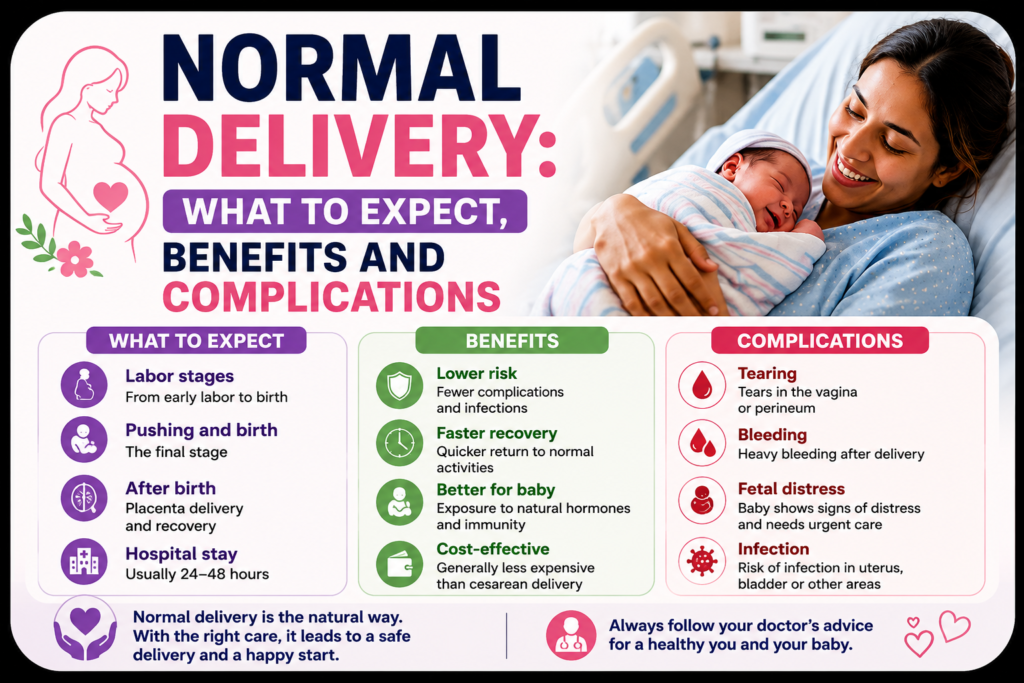
Pregnancy is one of the most beautiful journeys in a woman’s life, and childbirth is the final and most awaited stage of this experience. Among different birthing methods, normal delivery is often considered the most natural way to give birth. Many mothers prefer it because of faster recovery, lower medical intervention, and emotional satisfaction. However, understanding the process, benefits, and possible complications is essential for every expecting mother.
This guide will help you understand what happens during normal delivery, how to prepare for it, and what challenges may arise during labor and childbirth.
What is Normal Delivery?
Normal delivery, also known as vaginal birth, is the natural process through which a baby is delivered through the birth canal without major surgical procedures. Labor usually begins on its own between 37 and 42 weeks of pregnancy.
The process involves contractions, dilation of the cervix, pushing, and finally the birth of the baby. Depending on the mother’s health and the baby’s condition, doctors may allow labor to progress naturally or may assist using medications or minor medical interventions if required.
Signs That Labor is Starting
Every pregnancy is unique, but there are common signs that indicate labor may begin soon:
- Regular and painful contractions
- Lower back pain
- Water breaking
- Increased pelvic pressure
- Bloody mucus discharge
- Frequent urge to urinate
Once contractions become regular and intense, it is important to contact your doctor or visit the hospital.
Stages of Normal Delivery
1. Early Labor Stage
This is the beginning of labor when the cervix starts dilating. Contractions may feel mild at first and gradually become stronger and more frequent. This phase can last several hours.
During this stage:
- Walking may help ease discomfort
- Breathing exercises can reduce stress
- Staying hydrated is important
2. Active Labor Stage
In this stage, the cervix dilates more rapidly, usually up to 10 centimeters. Contractions become stronger, longer, and closer together.
Doctors and nurses continuously monitor:
- Baby’s heartbeat
- Mother’s blood pressure
- Contraction patterns
Pain management methods such as epidural anesthesia may be offered if necessary.
3. Delivery of the Baby
Once the cervix is fully dilated, the mother starts pushing during contractions. With proper guidance from healthcare professionals, the baby moves through the birth canal and is delivered.
Immediately after birth:
- The baby is cleaned and checked
- Skin-to-skin contact may be encouraged
- Breastfeeding can begin early
4. Delivery of the Placenta
After the baby is born, the placenta is expelled from the body. This stage usually takes a few minutes and is carefully monitored to prevent excessive bleeding.
What to Expect During Normal Delivery
Understanding what happens during labor can reduce fear and anxiety. Here are some common experiences women may have:
Pain and Contractions
Labor pain is natural and varies from woman to woman. Contractions help move the baby downward and prepare the body for birth.
Emotional Changes
Excitement, nervousness, fear, and happiness are all common emotions during labor. Emotional support from family members and healthcare providers can make a significant difference.
Hospital Procedures
Doctors may perform:
- Vaginal examinations
- Fetal heart monitoring
- Blood pressure checks
- IV fluids if required
Physical Exhaustion
Labor can be physically demanding, especially if it lasts many hours. Resting between contractions and following medical advice helps conserve energy.
Benefits of Normal Delivery
Normal delivery offers several advantages for both mother and baby.
Faster Recovery
Women who undergo vaginal birth usually recover more quickly compared to cesarean delivery. Most mothers can walk within hours after childbirth.
Lower Risk of Surgical Complications
Since there is no major surgery involved, risks such as infection, blood clots, and surgical pain are reduced.
Shorter Hospital Stay
Normal delivery often requires a shorter hospital stay, allowing mothers to return home sooner.
Better Breathing for the Baby
During vaginal birth, the baby’s lungs are naturally compressed, helping remove fluid and improving breathing after birth.
Easier Breastfeeding
Mothers who have normal delivery may find it easier to initiate breastfeeding because recovery is quicker.
Emotional Satisfaction
Many women feel empowered and emotionally fulfilled after experiencing natural childbirth.
How to Prepare for Normal Delivery
Preparation can increase confidence and improve the chances of a healthy delivery.
Eat a Healthy Diet
Nutritious foods support the health of both mother and baby. Include:
- Fruits and vegetables
- Protein-rich foods
- Whole grains
- Plenty of water
Exercise Regularly
Prenatal yoga, walking, and stretching exercises can strengthen muscles and improve stamina for labor.
Attend Prenatal Checkups
Regular medical visits help monitor the baby’s growth and detect any complications early.
Learn Breathing Techniques
Controlled breathing can help manage labor pain and reduce stress.
Get Enough Sleep
Proper rest is important during pregnancy, especially in the final trimester.
Stay Mentally Positive
Fear and stress can affect labor. Positive thinking, support from loved ones, and childbirth education classes can help mothers feel more prepared.
Possible Complications of Normal Delivery
Although normal delivery is generally safe, complications can sometimes occur. Doctors are trained to manage these situations effectively.
Prolonged Labor
Sometimes labor lasts too long because contractions are weak or the baby is not moving properly through the birth canal.
Excessive Bleeding
Heavy bleeding after delivery, known as postpartum hemorrhage, can be serious if not treated quickly.
Tearing
The tissues around the vagina may tear during childbirth, especially in first-time mothers. Minor tears heal naturally, while severe tears may require stitches.
Fetal Distress
If the baby’s heartbeat becomes abnormal, doctors may need to take emergency measures.
Infection
Infections may occur if labor is prolonged or medical hygiene is compromised.
Need for Emergency Cesarean Section
In some cases, doctors may switch to a cesarean delivery if normal birth becomes risky for the mother or baby.
Recovery After Normal Delivery
Recovery after childbirth is an important phase for every mother.
Physical Recovery
Common symptoms after delivery include:
- Vaginal soreness
- Mild bleeding
- Fatigue
- Muscle pain
These symptoms usually improve within a few weeks.
Emotional Recovery
Hormonal changes can cause mood swings or emotional sensitivity. Family support and adequate rest are essential.
Postpartum Care
Doctors may recommend:
- Proper hygiene
- Nutritious meals
- Hydration
- Regular follow-up visits
When to Contact a Doctor
Seek medical attention immediately if you experience:
- Heavy bleeding
- Severe abdominal pain
- High fever
- Difficulty breathing
- Reduced baby movement before delivery
Early medical care can prevent serious complications.
Choosing the Right Doctor for Pregnancy Care
Selecting an experienced gynecologist and obstetrician plays a major role in ensuring a safe pregnancy and delivery experience. Proper prenatal care, regular monitoring, and expert guidance help mothers feel more confident throughout the journey. Many expecting parents search for the Best Gynecologist Obstetricians in Aligarh to receive quality maternity care and professional support during childbirth.
Conclusion
Normal delivery is a natural and rewarding childbirth method that offers several physical and emotional benefits for both mother and baby. While labor can be challenging, understanding the process and preparing properly can make the experience smoother and less stressful.
Every pregnancy is unique, and the type of delivery depends on the health of the mother and baby. Regular prenatal care, a healthy lifestyle, and guidance from experienced healthcare professionals are the keys to a safe and successful childbirth experience.
With proper preparation, emotional support, and medical supervision, many women can enjoy a healthy normal delivery and a joyful start to motherhood.