IVF Treatment Explained: Step-by-Step Process and Expectations

Step-by-Step IVF Process Explained: A Complete Guide for First-Time Patients
June 27, 2026
IVF Preparation Guide: How to Get Your Body Ready for Treatment
July 2, 2026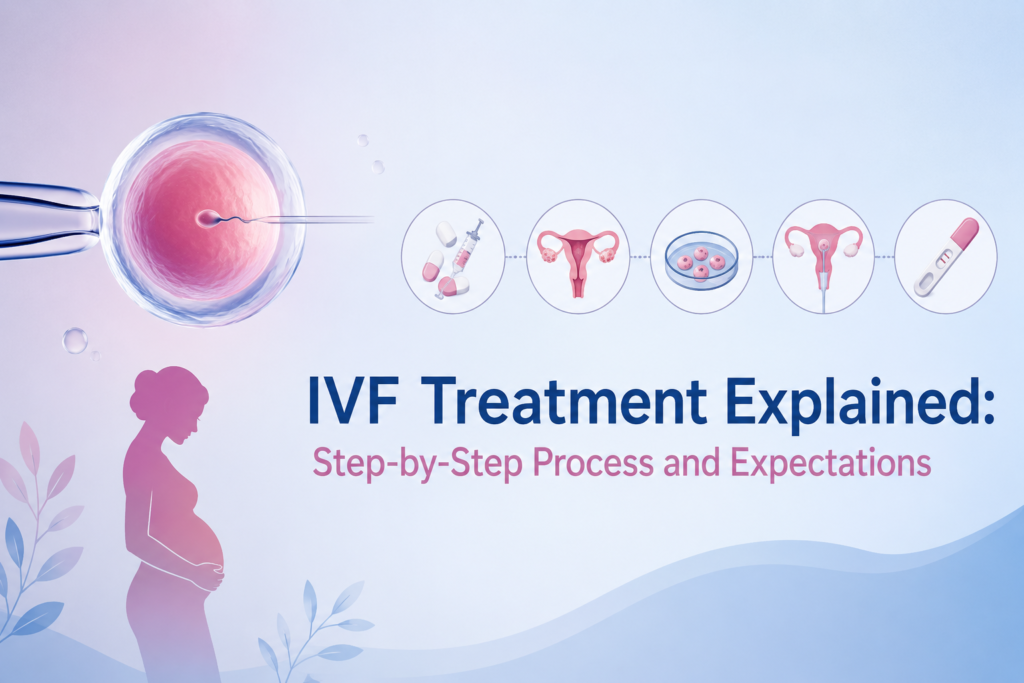
Infertility can be an emotional and challenging experience for couples who dream of starting a family. Fortunately, advancements in reproductive medicine have made parenthood possible for many through In Vitro Fertilization (IVF). If you are considering treatment, choosing the best IVF center in aligarh can provide access to experienced fertility specialists, advanced technology, and personalized care throughout your journey. IVF is one of the most effective fertility treatments available today, helping millions of couples around the world achieve successful pregnancies.
Understanding how IVF works can reduce anxiety and help couples prepare for every stage of the journey. While every individual’s treatment plan may differ slightly, the overall process follows a series of carefully monitored steps. This guide explains the IVF treatment process, what to expect at each stage, and how to prepare for a smoother experience.
What Is IVF Treatment?
In Vitro Fertilization, commonly known as IVF, is an assisted reproductive technology (ART) in which an egg is fertilized with sperm outside the body in a laboratory. Once fertilization occurs and healthy embryos develop, one or more embryos are transferred into the uterus with the goal of achieving pregnancy.
IVF may be recommended for individuals or couples facing fertility challenges such as:
- Blocked or damaged fallopian tubes
- Male factor infertility
- Ovulation disorders
- Endometriosis
- Unexplained infertility
- Age-related fertility decline
- Genetic conditions that require embryo screening
The treatment is personalized based on the patient’s medical history, age, and fertility condition.
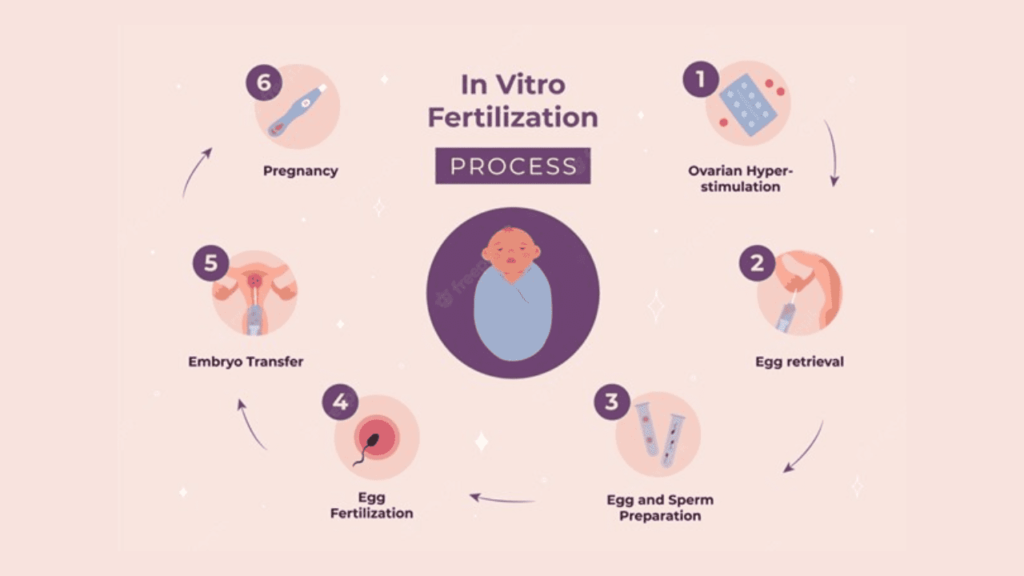
Step 1: Initial Consultation and Fertility Assessment
The IVF journey begins with a detailed consultation with a fertility specialist. During this appointment, the doctor reviews medical history, lifestyle factors, previous pregnancies, and any prior fertility treatments.
Several diagnostic tests are usually recommended, including:
- Blood tests to evaluate hormone levels
- Ultrasound scans to assess ovarian health
- Semen analysis for sperm quality
- Evaluation of the uterus and fallopian tubes
- Additional fertility investigations if needed
Based on these results, the fertility specialist creates an individualized treatment plan.
Step 2: Ovarian Stimulation
Normally, a woman produces one mature egg during each menstrual cycle. In IVF, fertility medications are used to stimulate the ovaries to produce multiple mature eggs, increasing the chances of successful fertilization.
During this stage:
- Daily hormone injections are administered.
- Regular ultrasounds monitor follicle development.
- Blood tests measure hormone levels.
- Medication doses may be adjusted based on the body’s response.
This phase usually lasts between 8 and 14 days.
Patients may experience mild bloating, abdominal discomfort, or mood changes due to hormonal medications, but these symptoms are generally temporary.
Step 3: Trigger Injection
Once the follicles reach the desired size, a trigger injection is given to help the eggs complete their final stage of maturation.
Timing is extremely important because the egg retrieval procedure is scheduled approximately 34 to 36 hours after the trigger injection. Following the doctor’s instructions carefully ensures the best chances of retrieving mature eggs.
Step 4: Egg Retrieval Procedure
Egg retrieval is a minor surgical procedure performed under light sedation or anesthesia. It is generally completed within 20 to 30 minutes.
During the procedure:
- A thin ultrasound-guided needle is inserted through the vaginal wall.
- Mature eggs are collected from the ovarian follicles.
- The collected eggs are immediately transferred to the laboratory.
Most patients recover within a few hours and can return home the same day. Mild cramping or spotting may occur but usually resolves quickly.

Step 5: Sperm Collection and Fertilization
On the same day as egg retrieval, a sperm sample is collected from the male partner or a donor if required.
The embryology laboratory prepares the healthiest sperm for fertilization. Depending on the fertility condition, one of the following methods may be used:
- Conventional IVF, where eggs and sperm are combined naturally in the laboratory.
- Intracytoplasmic Sperm Injection (ICSI), where a single healthy sperm is injected directly into an egg.
The fertilized eggs are then monitored carefully for successful embryo development.
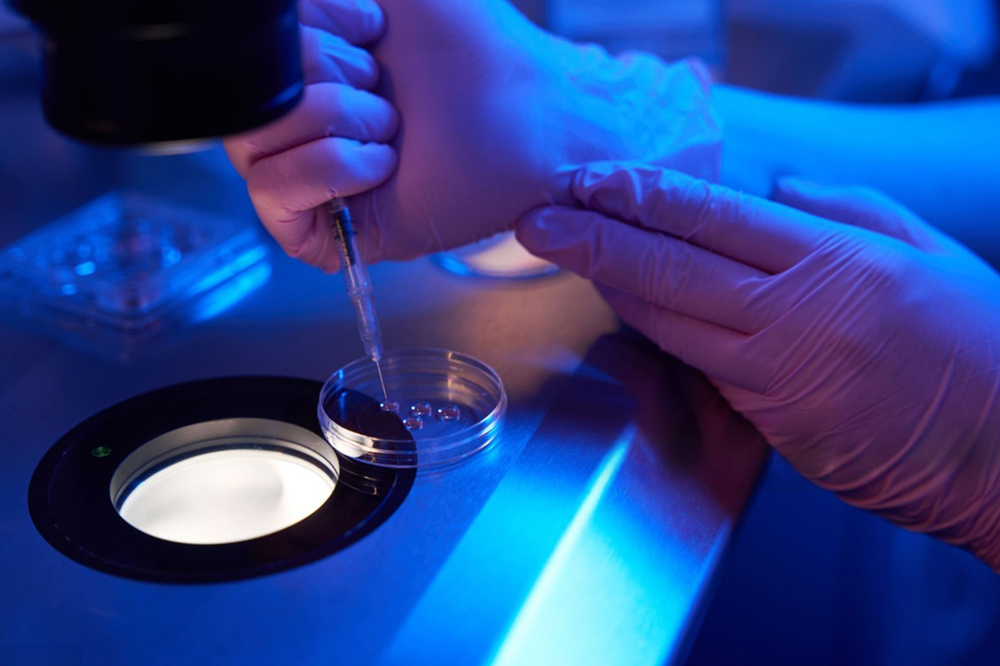
Step 6: Embryo Development
After fertilization, the embryos remain in a controlled laboratory environment for several days.
Embryologists monitor important factors such as:
- Cell division
- Embryo quality
- Growth pattern
- Overall development
Most embryos are cultured for three to five days before transfer. In some cases, embryos may be frozen for future use if immediate transfer is not recommended.
Step 7: Embryo Transfer
Embryo transfer is one of the simplest stages of IVF and usually does not require anesthesia.
During the procedure:
- A thin catheter carries the selected embryo into the uterus.
- Ultrasound guidance ensures accurate placement.
- The procedure takes only a few minutes.
Most patients can return to normal daily activities shortly afterward, although strenuous exercise should be avoided for a few days.
The number of embryos transferred depends on several factors, including age, embryo quality, and medical guidelines to reduce the risk of multiple pregnancies.
Step 8: The Two-Week Wait
The period between embryo transfer and pregnancy testing is often considered the most emotionally challenging stage of IVF.
During these two weeks:
- Hormonal medications continue to support implantation.
- Patients are encouraged to maintain a healthy lifestyle.
- Stress management techniques such as meditation, gentle walking, or reading may be helpful.
- Pregnancy symptoms may or may not appear during this period.
It is important not to rely on home pregnancy tests too early, as they may produce inaccurate results.
Step 9: Pregnancy Test
Approximately 10 to 14 days after embryo transfer, a blood test measures the pregnancy hormone (hCG).
Possible outcomes include:
- Positive pregnancy result
- Negative pregnancy result
- Need for repeat testing if hormone levels require monitoring
If pregnancy is confirmed, additional ultrasounds are scheduled to monitor fetal development.
If the cycle is unsuccessful, the fertility specialist reviews the results and discusses future treatment options.

What to Expect Emotionally During IVF
IVF is not only a physical process but also an emotional journey. Feelings of excitement, hope, anxiety, and uncertainty are completely normal.
Many couples find emotional support through:
- Counseling services
- Fertility support groups
- Family and close friends
- Open communication with their healthcare team
Maintaining emotional well-being is an important part of the treatment experience.
Tips for Preparing for IVF Treatment
Preparing your body and mind before IVF can contribute to a healthier treatment journey.
Some helpful recommendations include:
- Follow a balanced and nutritious diet.
- Maintain a healthy body weight.
- Exercise moderately.
- Avoid smoking and alcohol.
- Sleep for seven to eight hours each night.
- Take prescribed vitamins and supplements.
- Follow your doctor’s medication schedule carefully.
- Keep all monitoring appointments.
Healthy lifestyle choices support overall reproductive health throughout treatment.
Factors That Affect IVF Success
IVF success rates vary from person to person and depend on several factors.
These include:
- Age of the woman
- Egg quality
- Sperm quality
- Embryo quality
- Underlying fertility condition
- Uterine health
- Lifestyle habits
- Experience of the fertility clinic
While IVF offers excellent success rates, multiple treatment cycles may sometimes be necessary before achieving pregnancy.
Final Thoughts
IVF has transformed fertility treatment by giving hope to individuals and couples who face challenges in conceiving naturally. Understanding each step of the IVF process can help reduce uncertainty and allow patients to feel more confident throughout their treatment journey.
From the initial consultation to embryo transfer and pregnancy testing, every stage is carefully planned and monitored by fertility specialists to maximize the chances of success. Although the process may require patience and emotional resilience, choosing a trusted test tube baby center in aligarh can provide expert guidance, advanced fertility treatments, and personalized care. Modern reproductive technology continues to improve outcomes for many families, making parenthood possible for couples facing infertility challenges.
If you are considering IVF treatment, consulting an experienced fertility specialist is the first step toward understanding your options and creating a treatment plan that meets your individual needs. With proper medical guidance, realistic expectations, and emotional support, IVF can be a meaningful path toward building the family you have always hoped for.