IVF After 35: Risks, Reality, and Success Tips
Common IVF Myths That Stop Couples From Seeking Help
February 10, 2026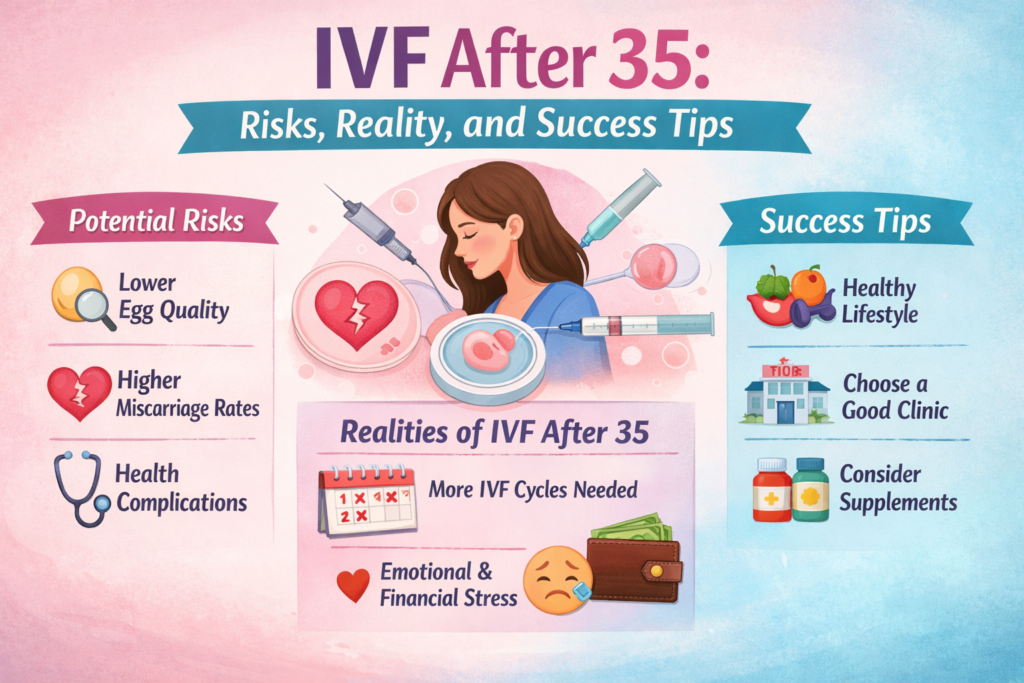
For many women, life after 35 looks very different than it did a generation ago. Careers, financial planning, personal goals, and late marriages have shifted the timeline of parenthood. But while life plans have changed, biology hasn’t. Fertility naturally declines with age, and this is where IVF often becomes part of the conversation.
If you’re considering IVF after 35, you deserve clear, honest information. Not fear. Not false hope. Just facts, practical guidance, and realistic expectations.
Why Fertility Declines After 35
Women are born with all the eggs they will ever have. As age increases, two things happen:
- The number of eggs decreases
- The quality of eggs declines
After 35, this decline becomes more noticeable. By 37–38, the drop is steeper. By 40, chances of natural conception significantly reduce.
Egg quality matters because chromosomal abnormalities become more common with age. This increases the risk of:
- Miscarriage
- Failed implantation
- Genetic conditions
- Lower IVF success rates
That does not mean pregnancy is impossible after 35. It simply means strategy and timing matter more.
What IVF Really Means After 35
IVF (In Vitro Fertilization) involves stimulating the ovaries, retrieving eggs, fertilizing them in a lab, and transferring a healthy embryo into the uterus.
After 35, IVF often becomes a recommended option because:
- Time is limited
- Egg reserve may be low
- Natural conception may take longer
- There may be repeated miscarriages
If you’re consulting the Best Gynecologist Obstetricians in Aligarh, they will usually suggest fertility testing first instead of directly jumping to IVF. This may include:
- AMH test (ovarian reserve)
- Antral follicle count (ultrasound)
- Hormonal profile
- Partner’s semen analysis
The goal is not to rush you. The goal is to avoid wasting time.
IVF Success Rates After 35: The Reality
Let’s be honest. IVF success is age-dependent.
Approximate success rates per cycle:
- Age 35–37: 35–45%
- Age 38–40: 20–30%
- Age 41–42: 10–20%
- Above 42: Less than 10% (with own eggs)
These numbers vary based on:
- Egg quality
- Sperm quality
- Clinic expertise
- Embryo grading
- Uterine health
- Lifestyle factors
This is why choosing the Best Fertility Clinic in Aligarh becomes crucial. Lab quality, embryologist experience, and proper embryo selection significantly affect outcomes.
Major Risks of IVF After 35
You need clarity about risks. Not to scare you, but to prepare you.
1. Lower Egg Quality
More embryos may arrest before reaching blastocyst stage.
2. Higher Miscarriage Risk
Chromosomal abnormalities increase with age.
3. Fewer Eggs Retrieved
Ovarian response to stimulation may be lower.
4. Emotional Stress
Multiple cycles may be required.
5. Financial Burden
IVF is not always a one-cycle success.
But here’s what’s important: risk increases gradually, not suddenly at midnight on your 35th birthday. Many women conceive successfully at 36, 37, even 40.
Should You Consider Egg Freezing After 35?
If you are 35–37 and not ready for pregnancy yet, egg freezing can be an option. However, freezing eggs after 38 is less effective compared to freezing before 35.
If you are already 39 or 40 and planning to conceive soon, IVF now is usually better than waiting longer.
Delaying further reduces chances more than most people realize.
How to Improve IVF Success After 35
You cannot change age. But you can influence outcomes.
1. Don’t Delay Evaluation
If you’ve been trying for:
- 6 months (age 35+)
Seek fertility consultation immediately.
Waiting one or two extra years can reduce success significantly.
2. Optimize Your Weight
BMI between 19–25 gives better IVF outcomes.
Both obesity and being underweight affect egg quality and implantation.
3. Control Thyroid and Sugar Levels
Uncontrolled thyroid disorders and insulin resistance reduce implantation chances and increase miscarriage risk.
4. Take Evidence-Based Supplements
Commonly recommended (only under medical advice):
- Folic acid
- Vitamin D
- CoQ10 (for egg quality)
- Omega-3
Don’t self-medicate. Proper dosage matters.
5. Quit Smoking and Alcohol
Smoking accelerates egg aging.
Even moderate alcohol can reduce IVF success rates.
6. Choose Embryo Genetic Testing (If Advised)
PGT (Preimplantation Genetic Testing) may help select chromosomally normal embryos, especially after 37.
It doesn’t guarantee success, but it reduces miscarriage risk.
7. Manage Stress — Realistically
Stress alone does not cause infertility.
But chronic anxiety can affect hormone balance and decision-making.
Therapy or fertility counseling helps many couples stay emotionally stable during treatment.
When Donor Eggs Become an Option
This is a sensitive topic. But we need to talk about it.
After 42, IVF success with own eggs becomes very low. In such cases, donor eggs dramatically increase success rates, often above 50–60%.
It’s not for everyone.
It’s not a failure.
It’s a medical option.
The decision should be emotional and practical, not ego-driven.
Is IVF After 35 Safe for the Baby?
With proper prenatal care, most IVF pregnancies result in healthy babies.
However, risks that slightly increase with age include:
- Gestational diabetes
- High blood pressure
- Preterm birth
- Cesarean delivery
This is why continuous monitoring by experienced specialists is important.
Common Myths About IVF After 35
Myth 1: 35 is Too Late
False. Many women conceive naturally and through IVF after 35.
Myth 2: One IVF Cycle Is Enough
Not always. Some require 2–3 cycles.
Myth 3: IVF Guarantees Pregnancy
No fertility treatment guarantees pregnancy.
Myth 4: Stress Alone Causes Failure
Not supported by strong medical evidence.
Emotional Side of IVF After 35
Let’s talk about something no one discusses enough: emotional pressure.
Women over 35 often feel:
- “I should have started earlier.”
- “Time is running out.”
- “Everyone else has kids already.”
That pressure can cloud decision-making.
Instead of panic-driven decisions:
- Get proper testing
- Understand your ovarian reserve
- Make a 6–12 month action plan
- Stick to medical guidance
Clear strategy beats emotional urgency.
How Many IVF Cycles Should You Try?
This depends on:
- Age
- Embryo quality
- Financial ability
- Emotional resilience
Many specialists suggest evaluating after 2–3 failed cycles before changing strategy.
If embryos are not forming well, donor eggs may be discussed earlier.
If implantation fails repeatedly, uterine evaluation becomes important.
Final Reality Check
Here’s the honest truth.
IVF after 35 is harder than at 28.
But it is absolutely possible.
The key differences are:
- Faster decision-making
- Stronger medical guidance
- Realistic expectations
- Better lifestyle discipline
What you cannot afford after 35 is delay.
Time is now your most valuable resource.
When Should You Seek Help?
You should consult a fertility expert if:
- You are 35+ and trying for 6 months
- You have irregular periods
- You had repeated miscarriages
- You have endometriosis or PCOS
- Your partner has low sperm count
The earlier you assess, the more options you have.
Closing Thoughts
IVF after 35 is not a crisis. It is a medical situation that requires planning.
Yes, risks increase.
Yes, success rates decline with age.
But science today offers solutions that didn’t exist 20 years ago.
What matters most is not panic. It’s action.
Get tested.
Choose the right specialists.
Optimize your health.
And make informed decisions instead of emotional ones.